HEALTHCARE
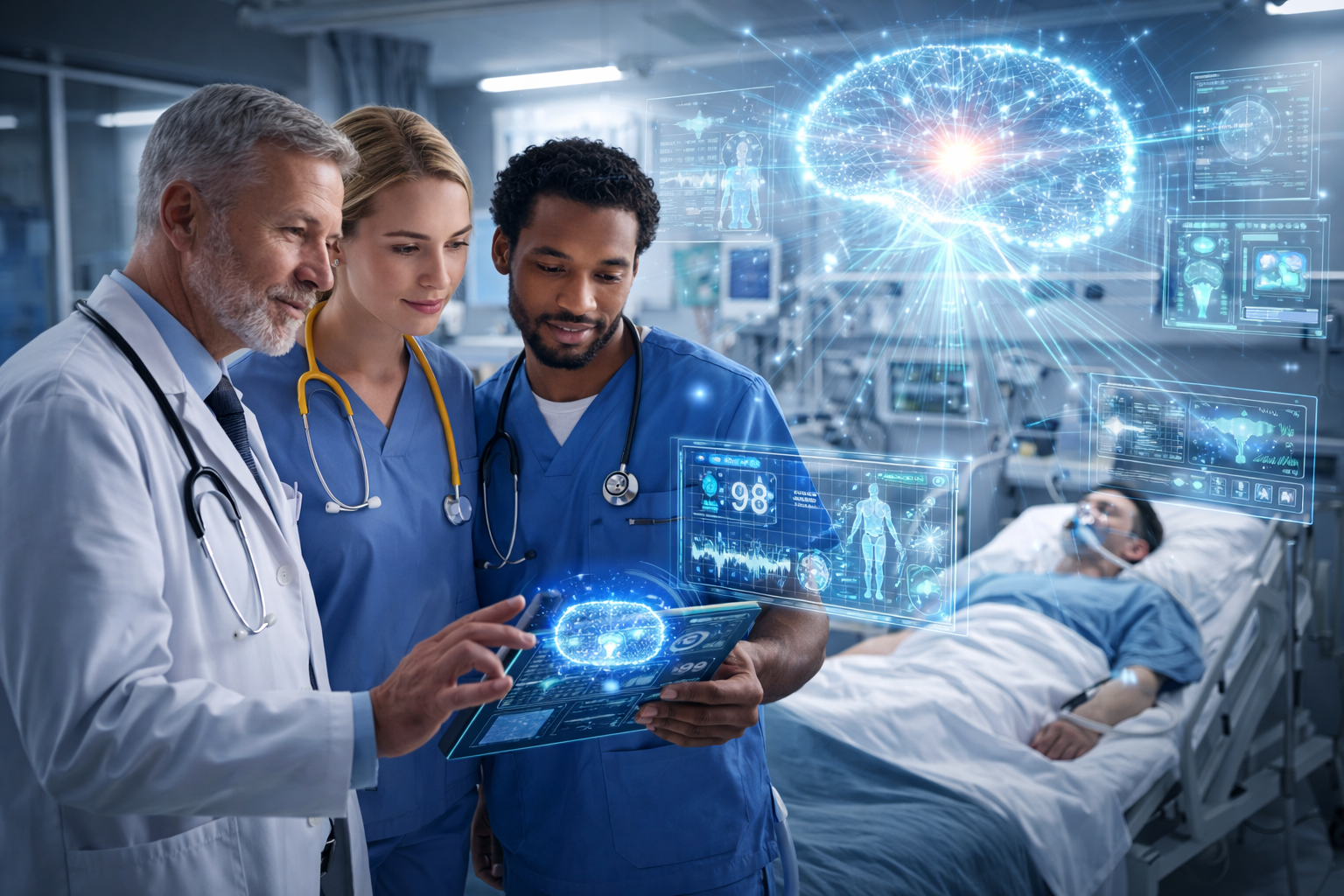
The Diagnostic Force Multiplier
In healthcare, the "Human Router" is the clinician. AI models are exceptional at pattern recognition—identifying anomalies in X-rays, spotting correlations in bloodwork, or suggesting rare diagnoses. But they lack the biological empathy and ethical weight to make the final call.
WeRAI places the doctor firmly in the center of the loop. The AI does not "treat" the patient; it prepares a probability collapse for the physician. It says, "Based on these 10,000 data points, here are the 3 most likely scenarios." The doctor then routes that intelligence into a care plan.
Local-First Privacy (ZERR)
Medical data is the most sensitive information a person possesses. Cloud-based AI solutions often require sending this data to centralized servers, creating privacy risks and compliance nightmares.
The WeRAI architecture is Local-First.
- Patient data resides on local, secure hardware (edge nodes) within the hospital or clinic.
- The AI models come to the data; the data does not go to the model trainers.
- Our "ZERR" memory layer ensures that context is maintained session-to-session without ever exposing patient identity to the public internet.
The "Second Opinion" Protocol
Because WeRAI acts as a router between multiple models (Gemini, Claude, Llama, Med-PaLM), we can instantly generate a "board of experts."
A doctor can ask, "Analyze this case," and the system can query three different specialized medical AIs simultaneously. The Human Router (the doctor) then sees where they agree and where they diverge. This "Collision Protocol" reveals truth through the friction of differing AI perspectives, with the human as the ultimate arbiter.